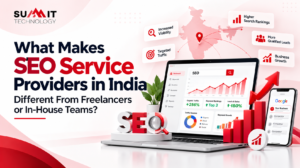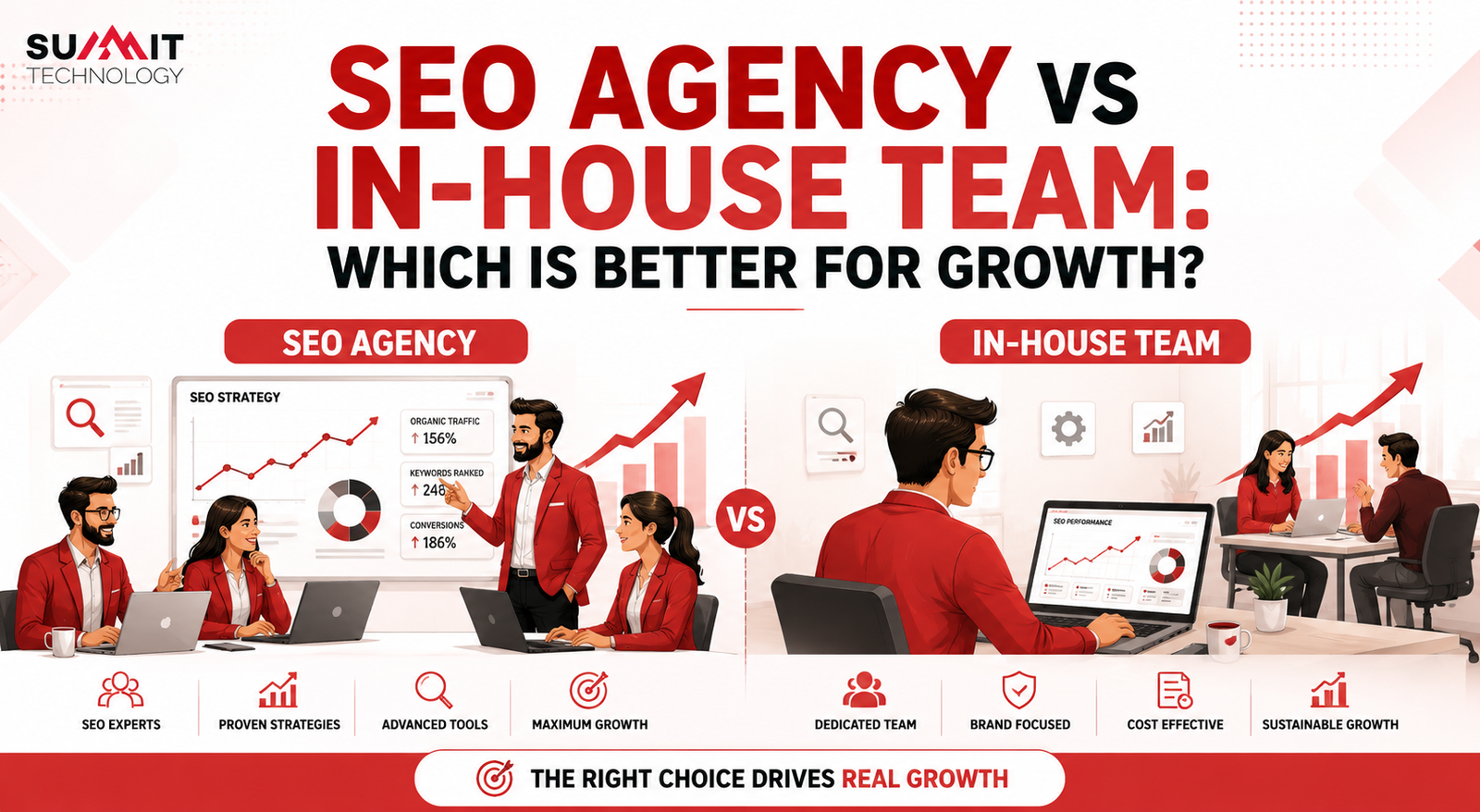
Each business that is growing in India will eventually have the same discussion during a meeting of the leadership to establish the internal SEO function and/or bring in an agency, already with the staff and equipment set up. It’s not an easy option. SEO affects the structure of websites, the content of the site, and how brands appear in search results when someone is searching for products on Google or requests an AI advisor for recommendations instead. There’s indeed no one all-encompassing winner. The ideal model will depend on the stage at which you are growing, your financial capacity, and how complicated your technological system is.
What an In-House Team Actually Gives You
A company-owned SEO hire can understand the brand as outsiders do from the beginning. They attend product meetings and know the upcoming launches in the coming quarters, and don’t require an outline document to establish the right tone. This kind of proximity can be extremely valuable for content strategy and daily communication choices.
The problem is the coverage. The typical hire is required to manage SEO technical aspects, content planning, linking, and even reporting at the same time. That’s a huge task one person can handle efficiently. Many companies that establish an internal department end up needing up to three specialists that work in tandem, while recruiting and coordinating that team requires time. If you’re a brand that is growing rapidly, an increase of six months could be a real loss in organic search, being lost to rivals who are constantly gaining ground.
Why Many Indian Businesses Lean Toward an Agency
This is one reason that a large number of companies that range from D2C businesses to established retailers wind up looking at an SEO agency in India rather than constructing a service completely from the ground up. A reputable agency comes with an existing team specific: a person who is dedicated to technical SEO, someone who thinks about the search engine’s intent and structure, and someone who monitors results in search and SERPs daily. Agents like Summit Technology tend to build their teams this way carefully, so that a customer is covered by a specialist right from day one, instead of waiting for an individual generalist who can learn all the information at once.
This advantage is amplified when it comes to e-commerce. Online stores in India face huge catalogues of their products, the seasonal increases around sales during the festive season, and constant pressure from online marketplaces. Ecommerce SEO services in India generally involve optimization of the category page as well as structured information about products and internal links across hundreds of SKUs, as well as website speed optimization, which is all difficult to keep a generalist on the right track,k in addition to the daily needs for content.
Indexing, Crawlability, and the Layer Most Teams Underestimate
It is where the gap between the two types of SEO is most evident. Problems with indexing and crawlability: broken canonical tags, duplicate URLs for products, and slow-loading pages are simple to overlook until they begin slowing down organic traffic. Companies that conduct regularly scheduled technical SEO reviews tend to detect the issues earlier because they have observed similar trends across a variety of other websites. The in-house team, while skilled, usually ends up reactive months after damage to the rankings has been done.
Why An SEO centric AI Approach Matters Right Now
Search itself has taken a new form. The ranking on page one is no longer a guarantee of visibility as it used to be, since a greater percentage of all search results are run through AI Overviews and AI assistants before the person clicks on a conventional result. Businesses that have adopted the SEO centric AI approach by structuring their content in a way that it is understood, summed up, and used by AI algorithms, hold on to visibility more effectively than brands that are still focusing on traditional results. This is an ever-changing goal that is rewarding teams who try out a wide range of sites and incorporate the learnings to strategy swiftly.
In the case of Summit Technology, this is among the most obvious patterns we’ve seen throughout client accounts: organizations that have established solid technical foundations and the right content designed for the search engine’s intent, as well as AI summaries, tend to maintain organic search visibility despite algorithm modifications, while others have seen traffic decrease without understanding the reason.
Cost Is Rarely as Simple as It Looks on Paper
An in-house SEO job typically appears less costly than an agency retainer at first glance. However, in reality, one hire does not cover technical SEO and content creation, link building, or reporting tools up to an industry standard. When premium software, training, as well as the need for a subsequent or even a fourth hire is added to the mix, many businesses discover the agency retainer provides an entire team for an equivalent or lesser expense, and at minimum until the organization is at a point where an extensive internal team can be self-sustaining.
A Hybrid Model Is Becoming the Practical Default
The most effective configuration is not exclusively internal or in-house only, and it’s a combination of the latter. An internal leader with a small staff manages branding context and the relationships with management, while an agency is responsible for execution. SEO technical services and audits, production of content, and even reporting. This is ideal for medium-sized Indian enterprises that have grown beyond the capacity of a generalist and aren’t ready to form an internal team.
Making the Right Call for Your Business
If you’re in the early stages of a mid-sized company, especially in the field of e-commerce, a professional agency typically helps you achieve the organic growth stage faster and with less risk of hiring. If you’re a bigger business with a well-established SEO budget and complex internal systems, an internal team, perhaps aided by experts from outside for SEO reviews or AI strategies for search, could be the ideal choice. There’s no definitive solution. It is better to revisit the decision over time as the company grows and as its search continues to evolve.
Teams like Summit Technology often work with companies when they are at this stage to help them determine which of an in-house team, an agency, or a hybrid strategy is suitable for their stage, which is based on actual information about traffic and audits of technical quality rather than a guess. No matter where a company is on the end of this spectrum, however, the aim remains the same: an effective digital marketing strategy that can endure as the world of search is constantly shifting.