Most on-page SEO advice reads like a checklist: add your keyword to the title, write a meta description, use an H1 tag, done. Follow that checklist to the letter, and you’ll technically have “optimized” a page, yet plenty of businesses do exactly this and still see no meaningful movement in rankings or traffic. The gap between checklist compliance and actual, measurable growth is where most on page search engine optimization advice quietly falls short, because it treats every page the same rather than treating optimization as a process tied to real performance data.
This article breaks down on-page techniques specifically built around producing measurable results, not just technical correctness, and what separates surface-level optimization from the kind that expert on page SEO services actually deliver.
Why “Technically Optimized” Doesn’t Guarantee Growth
It can have all the correct boxes ticked, all the correct keywords in the title, all the right structure of headers, all the right word count, and still fail to perform if it doesn’t really meet the needs of all the people who click on it and come to this website. The quality of content and user satisfaction is no longer just measured by keyword density, and the practice of using checklists is becoming less and less effective.
Measurable growth means ensuring that on-page changes are aligned to real results – does that change mean better click-through rate, time on page, or conversion – not just that it is doing the right thing as per best practice guidance.
Find content structure that really boosts engagement metrics.
Addressing the main search query in the first couple of sentences. If visitors have to scroll through unnecessary preamble before getting to the page that they were looking to see, then they will have higher bounce rates. The idea is to provide the most important answer right up front, followed by any supporting content in the main body of the text, thus ensuring the reader is engaged and communicating more effectively with the search engines that pay attention to dwell time.
Dividing content into truly scannable chunks: Headers should tie to specific and thematic sub-topics, not just add a few variations of keywords. Easy-to-scan content increases visitor time on page – and that equals improved performance over time.
Content depth matching search intent: A page with a more complex search intent will support lengthier content, whereas a page that may have a more basic search intent will not need to be padded with extraneous words. When your content is the same length as your goal, it is generating more engagement signals, not by trying to hit some arbitrary word count.
Technical On Page Elements that make a difference
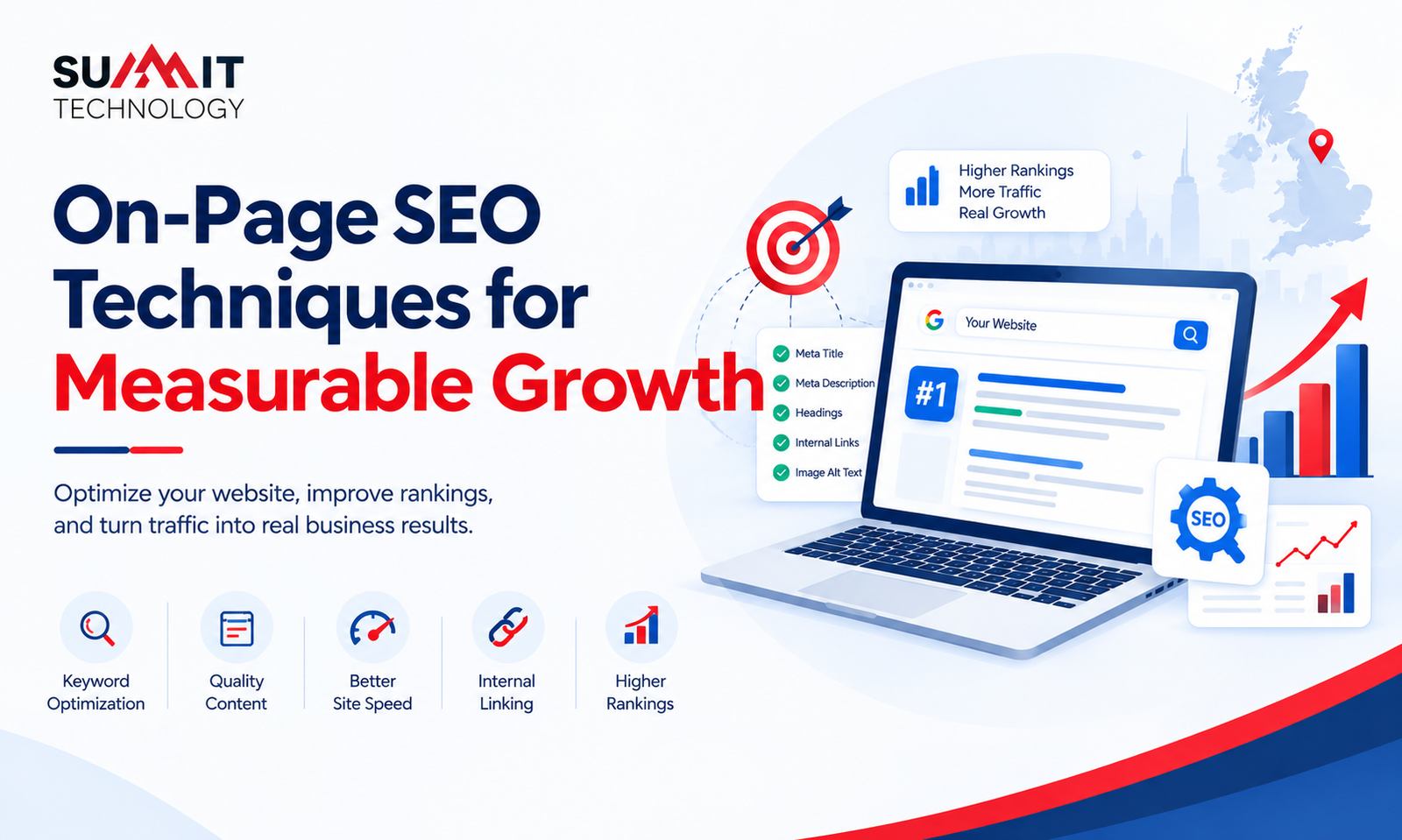
Title tags written with a perspective of being “click-through” minded rather than solely for keywords. Titles that are stuffed with keywords but have awkward phrases don’t drive good CTRs, whereas titles that are relevant to the content but have a natural phrase are more likely to attract high-quality click-throughs.
Meta descriptions as actual ad copy: Meta descriptions don’t directly impact SERPs, but they have an impact on click-through rate. Therefore, if you’re thinking of it as actual selling copy for the page, as opposed to copy that’s stuffed with keywords, you’ll see a measurable result in search performance metrics.
Internal linking for true topical relevance: Linking pages that are truly relevant from a user perspective, spreading authority to important pages and allowing users to naturally find related content in a natural way – not linking just for the sake of it to boost the number of links.
Optimisation of images for speed and accessibility. Well-compressed images with descriptive alt text not only speed up page load time (which is a direct ranking factor), but they also make content accessible and offer more context that search engines can use to interpret the page’s content.
Create a Feedback Loop, rather than a one-time checklist
In terms of the fundamental distinction between on page optimization and an on page optimization designed to drive measurable growth, it’s whether performance is used to drive ongoing changes.
Set a baseline for crucial pages such as ranking, click-through rate, time on page, and conversion rate before you change anything.
Only make targeted, isolated changes; it is possible to know what contributed to an improvement if there is one.
Don’t make judgements based on results that may take months, as search engines take time to update rankings.
Optimize based on actual data, rather than assumptions, by changing your title tags, content structure, or internal link strategy.
Target pages with the highest realistic potential first and target effort on pages that are closest to ranking improvements or pages that already have some meaningful traffic.
This is where a one-time optimization pass is different from a strategy that builds on itself over time.
Common Errors Which Inhibit Measurable Growth
Failing to consider on page optimization as a continuous effort based on performance metrics.Considering on page optimization as a one-time affair, not a continuous effort based on performance metrics.
Optimizing content just for the keywords, without taking into account the real intent of the user of those keywords.
Making several changes at the same time, which makes it difficult to decide which one of the changes is responsible for the improvement.
Relying solely on ranking position without taking into account the engagement rate, such as bounce rate or time on page.
Filling content length with content that is not relevant to the depth of search.
Bringing It Together
On-page optimization for search engines that delivers measurable growth is different from on-page optimization for the sake of checking the boxes and getting it right. Creating content based on real search intent, creating titles and descriptions optimized for real click-through, and creating a feedback loop that relates changes to results is always superior to a single optimization pass that is considered done once all the boxes are checked.
Looking for on-page optimization that focuses on achieving real results instead of simply checking off items on a checklist? Summit Technology offers expert on-page optimization services that monitor true results and then tweak strategy to capitalize on what truly works for your pages.