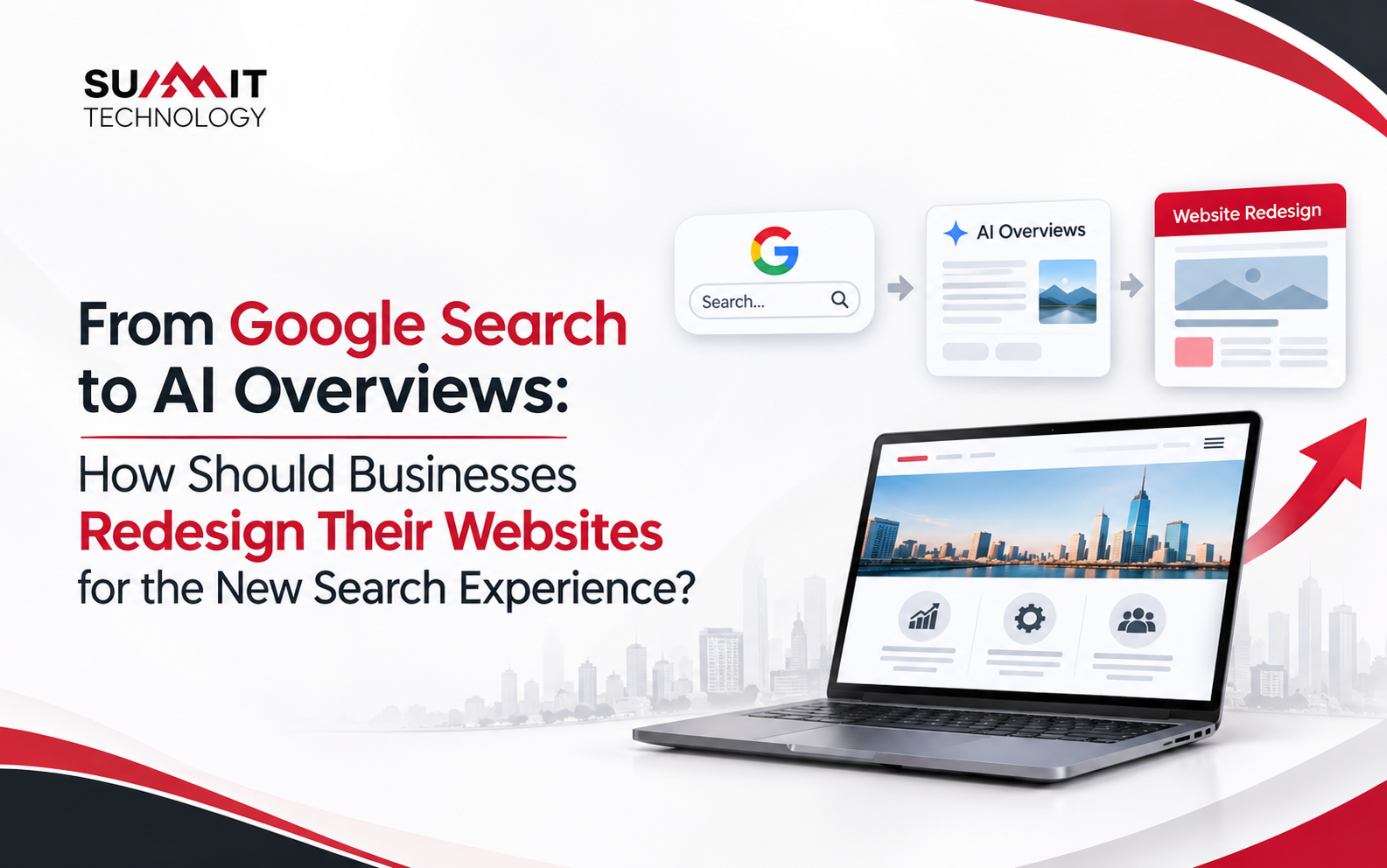
A business that ranked first on Google in 2023 could expect a click-through rate of around 7 percent on that position. By December 2025, that same first-ranked result was receiving a click-through rate of 1.6 percent on queries where an AI Overview appeared. That is not a gradual decline. It is a structural transformation of how search traffic works, and it is already affecting Indian businesses across every category from healthcare and finance to real estate and e-commerce.
The Ahrefs analysis published in February 2026 found that AI Overviews reduce the organic click-through rate for the top-ranking result by 58 percent. For a recipe platform tracked by WPP Media India, the first-position CTR fell from around 5 percent in December 2024 to below 1 percent by February 2026. In one automobile-sector engagement, organic traffic declined by 37 percent, while organic click-through rates fell by 58 percent simultaneously.
For Indian businesses whose websites were designed around attracting organic search traffic through content and keyword optimisation, this shift demands a fundamental rethink, not of the content strategy alone but of the website itself.
Why AI Overviews Change What a Website Needs to Do
The traditional purpose of an Indian business website operating within a search-driven digital marketing strategy was to rank for queries that prospective customers were searching, attract those users through organic clicks, and convert them into leads, purchases, or enquiries on the website. The search engine was a referral mechanism, and the website was where the relationship actually happened.
AI Overviews disrupt the first part of this chain. For informational queries, which represent a large proportion of the content that most business websites have been publishing, the AI Overview answers the user’s question directly on the search results page. The user does not click through. The website receives no visit, no impression, and no opportunity to convert.
This shift is concentrated in specific query types. Procedural queries (“how to open a Demat account”), comparison queries (“which health insurance plan is best in India”), and definitional queries are the highest-risk categories. Commercial intent queries (“website redesign services India” or “digital marketing agency Bangalore”) are less affected, because AI Overviews are less likely to appear on these searches and because users with transactional intent are more likely to click through regardless.
The practical implication for website redesign is not to abandon content but to change what the content is for. Content that exists to answer generic informational questions is increasingly redundant on the website because the AI answers it before the user arrives. Content that demonstrates specific expertise, builds brand authority, enables conversions, and positions the business for citation in AI-generated answers serves an entirely different and more durable purpose.
The Website Architecture Changes That the New Search Environment Requires
A website redesign oriented toward the AI search era requires structural changes that go beyond updating the homepage design or refreshing the colour palette. The architecture of the site, the content hierarchy, the technical foundation, and the conversion pathways all need to be aligned with how both AI systems and human users now engage with business websites.
Entity and topical authority architecture. AI systems, including the AI powering Google’s Overviews, understand the web through entities and their relationships. A website that clearly establishes its core subject matter expertise through deep, interconnected content covering all relevant aspects of a topic is more likely to be cited in AI Overviews and to rank for high-intent queries than a website with shallow coverage across many unrelated topics.
For an Indian business in a specific vertical, this means the website redesign should include an audit of the content architecture to ensure it builds clear topical depth in the areas most relevant to the business’s actual expertise. A law firm in Mumbai whose website covers real estate, criminal, family, and corporate law equally shallowly will perform worse than one whose website demonstrates genuine depth in real estate law while covering other areas more cursorily.
Direct answer content blocks. When AI Overviews do cite websites, they pull from content that provides clear, direct answers to specific questions early in the page, without burying the answer in lengthy preamble. Website redesign services in India that account for AI search need to build content templates that front-load the specific answer, then follow with the contextual depth and credibility signals that keep the reader engaged after landing.
Conversion architecture for lower-volume, higher-intent traffic. Since total organic traffic volumes are under downward pressure, the conversion rate on the traffic that does arrive needs to work harder. Website redesign work for Indian businesses in the current environment should focus significant attention on the conversion experience: how quickly a visitor can reach a relevant call to action, how clearly the business’s specific expertise is communicated, and how seamlessly a visitor can move from information to inquiry.
Summit Technology has been rethinking its website redesign frameworks around exactly this conversion-first orientation, recognising that a website receiving 30 percent less traffic needs to convert at a meaningfully higher rate to maintain the same lead flow.
What Should Indian Businesses Actually Build in a Redesigned Website
There is a distinction worth making clearly. The businesses most negatively affected by AI Overviews are those whose traffic was built primarily on informational content designed to rank for generic queries. The businesses showing resilience, and in some cases growth, are those with strong brand signals, specific expertise, and content that serves users who are already in a decision-making process rather than a research-gathering one.
An analysis across categories found that commercial websites, those with business-oriented content and strong conversion architecture, averaged a 153 percent increase in organic traffic in the post-AI Overviews environment. This suggests that the websites being hurt are primarily those competing for generic informational queries, while websites that serve users with specific intent and clear commercial relevance are holding or growing.
The practical website redesign agenda for an Indian business in 2026 should include three components that most website redesign companies in India are not yet building as standard.
The first is an AI visibility audit. This involves identifying which queries the business needs to appear in AI Overviews for, understanding what content types those Overviews currently pull from, and designing the website’s content architecture to be more citable. A website redesign company in India operating in this space needs to treat AI visibility alongside traditional SEO rather than as a separate discipline.
The second is a brand authority layer. AI Overviews disproportionately cite authoritative sources on topics relevant to a query. A website that is associated with named experts, that earns coverage in credible publications, that publishes original research or data, and that presents clear expertise signals in its content is more likely to be cited than one without these signals. This means the redesign should include thought leadership content, author credential presentation, and original data wherever possible.
The third is an owned channel infrastructure. With organic clicks under structural downward pressure, a website redesign that does not build mechanisms for capturing visitor data, newsletter subscribers, or WhatsApp contacts is leaving the business exposed to continued traffic erosion with no owned audience to fall back on. Email and WhatsApp list growth rates are becoming as important a metric as organic traffic volume.
Summit Technology’s approach to website redesign services in India incorporates all three of these components, building not just a website that looks current but one that is architecturally prepared for the search environment that is operating right now rather than the one that existed two years ago.
The Technical Changes That Support AI and Search Performance Simultaneously
The technical foundation of a website redesigned for the AI search era is not dramatically different from what good technical SEO has always required, but several elements become more important than they were previously.
Page speed and Core Web Vitals remain the baseline. AI Overviews cite pages that Google’s systems can crawl and assess efficiently. A slow, technically unstable website is not a candidate for citation regardless of content quality.
Structured data and schema markup become more important when the goal is AI citation rather than traditional ranking. Schema that clearly identifies the entity type of the business, the specific services or products offered, the geographic area served, and the expertise of named authors helps AI systems understand what the website represents and when it is a relevant citation for a query.
Mobile performance is non-negotiable in the Indian context. Indian users skew heavily mobile, and scrolling past an AI Overview on a mobile device requires explicit effort. The users who scroll and click through are demonstrating high intent, and the mobile experience of the website they land on needs to convert that intent efficiently.
Summit Technology builds website redesigns on this technical foundation as a minimum standard, treating performance, structured data, and mobile experience as prerequisites rather than enhancements.
Conclusion
The search experience has changed fundamentally, and the websites that Indian businesses built for a click-through-rate-driven organic traffic model are increasingly misaligned with the search environment they are operating in. AI Overviews have reduced position-one click-through rates by 58 percent on affected queries, and that erosion is continuing rather than stabilising.
The response is not to abandon the website or to invest exclusively in paid traffic. It is to redesign the website around the conditions that actually exist: build topical authority depth rather than generic breadth, orient the content architecture toward AI citability and conversion rather than traffic volume, build owned audience capture into the site’s conversion pathways, and ensure the technical foundation supports both search performance and AI visibility.
Summit Technology works with Indian businesses to deliver website redesign services that account for the current search environment, not the one that existed in 2022. For businesses evaluating whether their current website is built for how their customers are now finding and evaluating them, an audit against these new criteria is the most useful first step.