Two companies can provide similar month-long retainers, offer identical rankings for keywords, and deliver almost identical proposals. A year later, one customer sees organic traffic increase in a steady manner, whereas the other is just waiting for a single rank to change. It’s not always down to the price. The issue is what happens in the background between the proposed plan and the report that is issued monthly.
Companies looking for the top SEO service in India typically compare companies that appear similar on paper. Each company claims “proven results” and “customized strategy.” The actual difference is in how the work gets done every week, and instead of what’s stated in the sales pitch. This article explains what top-quality providers do differently in comparison to the standard SEO service provider in India and will make you aware of the specifics you should be looking for prior to entering into the contract.
How Top Agencies Structure the Initial Audit
The average company runs an initial audit with an instrument that creates a non-specific PDF that lists concerns such as “improve meta descriptions” or “increase site speed,” before moving straight to implementation. The top SEO businesses conduct a layered audit that combines crawl information as well as backlink profile analysis, competitor gap mapping, and an examination of the way the website performs on actual search terms that are related to their particular business.
The process is typically one to two weeks, not just a few minutes. It creates a priority list that is with specific pages and certain ranking possibilities, but not general best practices that can be applied to all websites regardless of industry.
How Keyword Strategy Actually Gets Built
A less reputable agency draws keyword volumes from one tool, then sorts it by search volumes of search, and then hands the client a list. An experienced agency adds the following three variables: the intent of a keyword, the difficulty of ranking relative to the domain’s authority, and the possibility of revenue per conversion. The result is that keywords are now ranked.
A keyword, for instance, which has a monthly volume of 10,000 searches, however, a broad intent for information typically will be snubbed in favor of a lesser-volume keyword that has obvious commercial goals, as it converts the latter to leads at a greater amount. Most providers don’t do this. This is the reason some campaigns bring in visitors but do not generate revenue.
How Content Gets Produced and Optimized
Production of content is the point where the difference between standard and the best providers becomes apparent. Low-cost companies typically outsource the creation of content to writers who lack experience in the subject matter and produce articles that meet keyword requirements but appear to be sloppy or repetitive to a user. Google’s algorithms are more likely to consider real depth to the topic as well as user interaction signals. This means that content with little substance can be ranked briefly, but then drops after real competitors have published more substantial content.
Leading agencies employ a subject matter briefing with experienced writers. They then put each article through an editor’s review for accuracy, quality, precision, and genuine value before releasing. It adds some time for each article; however, it creates quality content that maintains its place instead of slipping away in a few months.
How Link Building Gets Executed Safely
The majority of average providers depend on large link-building services and purchase large amounts of backlinks that are low quality from link farms and directories that are not related to each other. It can result in a temporary rank boost, but then penalties that are severe after the algorithm of a search engine changes reduce the value or flag them.
More reputable agencies can build links by directly engaging in outreach, guest postings on industry-related websites, and through digital PR linked to newsworthy content from clients. The process takes longer and results in fewer hyperlinks per month. However, each link has genuine relevancy to domains and can withstand algorithm changes that frequently remove links that are spammy.
How Technical SEO Gets Monitored Over Time
A one-time fix to a technical issue isn’t equivalent to continuous surveillance of technical issues. Most providers perform an initial tech-related cleanup and seldom go back to it until the customer has a specific issue. High-end providers employ constant monitoring of crawl issues, page speed issues, broken internal links, and indexing problems, finding issues in days instead of months.
The reason is that technical problems are often exacerbated by subtlety. One broken redirect chain or slow-loading product page could affect rankings for several months before anybody notices, when the average service provider notices it in a quarterly audit, and the damage to rankings has typically already been absorbed.
How Reporting Actually Reflects Business Impact
Average reports show ranking spots and traffic statistics isolated; numbers appear impressive, but they don’t relate to the business results. The top providers link every report back to specific indicators: what keywords actually drove form submissions that resulted in qualified leads, and how the organically driven revenue varies with the cost of a retainer.
This is especially important when it comes to renewal. The person who is reviewing the ranking screen doesn’t have a clear way of measuring the ROI. If a client is reviewing reports that link ranking directly to leads and revenues can make an informed choice about the effectiveness of the campaign. effective.
A Quick Checklist Before Choosing an SEO Provider
- Have a look at an example of an audit done by an old client, and not merely the template
- Verify how keywords are picked, and not just how they’re recorded
- Contact directly for information about the review process and the person who actually writes the content
- Get specifics from link-building sources, not just the monthly count of links
- Check if the monitoring of technical aspects is all the time or just during scheduled review times.
- Get a report sample that connects rankings with revenues or leads, not only traffic
Final Thoughts
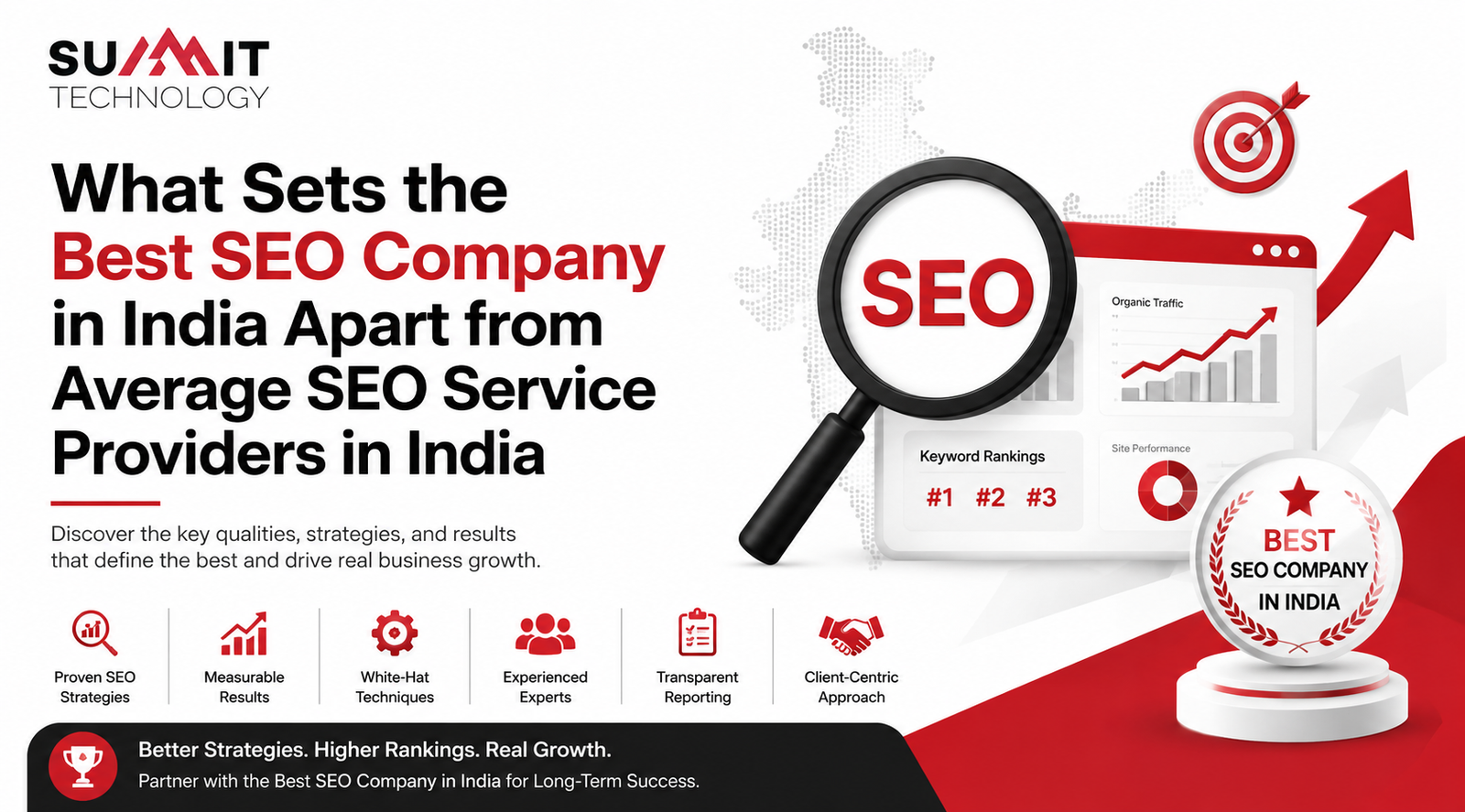
The difference between a top SEO business that is based in India and a typical service is apparent through the process, but and not just in the way the audit process is laid out in the process, how keywords are ranked in terms of intent and revenue potential as well as how content is vetted before publication, the way hyperlinks are earned, not buying them at a wholesale price, and how the reporting is tied to real performance of the business. Check any company you’re considering through the above checklist prior to concluding a contract.
Summit Technology builds its process around these specific distinctions, starting with layered audits and progressing to reporting tied to revenue, providing customers a precise, verified benchmark to evaluate their results against instead of a vague guarantee of rankings.